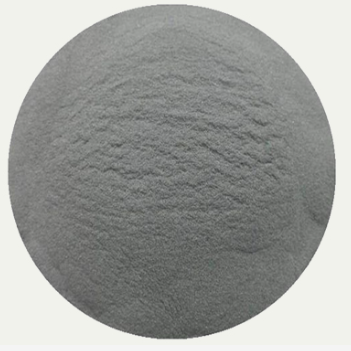
Ultrafine Aluminium Powder
GJB1738A-2015JinHui Powder manufactures fine and ultrafine aluminium powder to GJB 1738A-2015 in our own plant in Inner Mongolia, China, and exports it to more than 50 countries. The range runs from a laser median diameter (D50) of 43 μm down to 2 μm, in two families: fine atomized powder (FLT1 to FLT4) and fine spherical powder (FLQT0 to FLQT5) with tap density up to 1.6 g/cm³.
Choose the grade by what the powder has to do: surface area for chemical conversion and pigment opacity, flow and tap density for dosing and pressing, tightness of the top cut for a clean film or a stable slurry. Standard medial diameters and chemical limits are in the specification sheet below; anything between the standard cuts can be produced to order.
What "Fine" Means Here
This page is specified by median particle size, D50, measured by laser diffraction — not by a sieve cut. That is a different question from the one our ball-milled aluminium powder page answers. A sieve number tells you the largest particle that got through; a D50 tells you where the middle of the distribution sits, which is what actually controls surface area, reaction rate and how a pigment scatters light.
Two numbers are needed to pin a powder down, and the specification sheet gives both. The first is the median: FLT1 at 29 μm, FLT2 at 24, FLT3 at 13, FLT4 at 6, and on the spherical side FLQT0 at 43 down to FLQT5 at 2. The second is the top cut — the ≥45 μm and ≥71 μm limits that stop a fine median from hiding a coarse tail. A powder can hit a 24 μm median and still carry enough oversize to speckle a paint film or block a nozzle, which is why we quote both.
When you compare suppliers, ask for four figures on the same certificate: D50, the top cut, tap density and active aluminium. A quote that gives only a median is not comparable with one that gives all four.
Specification Table
Note: We can produce according to the customer’s requirements. “—” means the item is not specified in the specification sheet.
Fine atomized aluminium powder — size distribution
| Type | size distribution | ||
|---|---|---|---|
| D50/ μm | ≥45μm (%) | ≥71μm (%) | |
| FLT1 | 29±3 | ≤25 | ≤5 |
| FLT2 | 24±3 | ≤25 | ≤5 |
| FLT3 | 13±3 | – | – |
| FLT4 | 6±2 | – | – |
Fine spherical aluminium powder — size distribution & tap density
| Type | size distribution | Tap density(g/cm³) | ||
|---|---|---|---|---|
| D50 /μm | ≥45μm (%) | ≥71μm (%) | ||
| FLQT0 | 43±7 | – | – | – |
| FLQT1 | 29±3 | ≤25 | ≤5 | ≥1.6 |
| FLQT2 | 24±3 | |||
| FLQT3 | 13±2 | ≤5 | – | ≥1.5 |
| FLQT4 | 6±1.5 | – | – | ≥1.4 |
| FLQT5 | 2±1 | – | – | – |
Chemical composition
| Type | Active Al ≥ (%) | Impurities ≤ (%) | |||
|---|---|---|---|---|---|
| Fe | Cu | Si | H₂O | ||
| FLT1 | 98.0 | 0.2 | 0.015 | 0.2 | 0.10 |
| FLT2 | 98.0 | 0.2 | 0.015 | 0.2 | 0.10 |
| FLT3 | 98.0 | 0.2 | 0.015 | 0.2 | 0.10 |
| FLT4 | 96.0 | 0.2 | 0.015 | 0.2 | 0.10 |
| FLQT0 | 98.0 | 0.2 | 0.015 | 0.2 | 0.10 |
| FLQT1 | 98.0 | 0.2 | 0.015 | 0.2 | 0.10 |
| FLQT2 | 98.0 | 0.2 | 0.015 | 0.2 | 0.10 |
| FLQT3 | 98.0 | 0.2 | 0.015 | 0.2 | 0.10 |
| FLQT4 | 98.0 | 0.2 | 0.015 | 0.2 | 0.10 |
| FLQT5 | 97.0 | 0.2 | 0.015 | 0.2 | 0.10 |
FLT or FLQT: Atomized or Spherical
The two families are not a quality ladder; they are two shapes. FLT grades are fine atomized particles with an irregular outline. FLQT grades are fine spherical particles, and the specification adds a tap density that the atomized grades do not carry.
| Family | Grades | D50 range | Tap density | Choose it when |
|---|---|---|---|---|
| Fine atomized (FLT) | FLT1 – FLT4 | 6 – 29 μm | Not specified | Surface area and cost drive the decision: chemical conversion, pigments in solvent systems, applications where a slightly irregular particle wets or reacts faster |
| Fine spherical (FLQT) | FLQT0 – FLQT5 | 2 – 43 μm | ≥1.4 – 1.6 g/cm³ on FLQT1–4 | Flow and packing drive the decision: accurate dosing, pressing, low-dust handling, and a brighter, more specular metallic effect |
The practical consequences are worth spelling out. A spherical particle rolls, so it meters through a feeder without bridging and packs to a higher tap density, which means more metal per litre of silo and less air freight per tonne of active material. A spherical particle also presents less surface for the same diameter, so it carries less oxide and ignites less readily in handling. An irregular particle exposes more surface per gram, which is exactly what a chemical reaction or a hiding-power calculation wants, and it is normally the cheaper of the two.
Below 6 μm the behaviour of both families changes: flowability falls away, dust becomes the dominant handling risk, and the powder is usually bought as a slurry or a paste rather than as a dry bag. If your process needs the finest cuts, say so at inquiry stage and we will quote FLQT4, FLQT5 or a classified cut to your D50.
Applications by Industry
Fine aluminium powder is bought for four different jobs, and the grade is normally decided by which one you are doing rather than by the price per kilogram.
Metallic pigments for inks and plastics
Ink, coating and masterbatch producers use the fine cuts as a metallic pigment. What matters is the particle size distribution: a narrow top cut gives a clean, bright face tone, while a long coarse tail produces sparkle and, past a point, visible speckle. FLT grades are the usual starting point for solvent-borne systems, and FLQT grades are preferred where a more mirror-like, specular effect is wanted and the ink has to pass through a fine anilox or a narrow nozzle.
Metal coating and reflective finishes
Sprayed aluminium coatings, reflective roof coatings and heat-resistant paints rely on the flake or particle lying flat and reflecting over a broad angle. Covering power per unit weight is the commercial number here: the finer and more consistently sized the powder, the less metal is needed to reach a given opacity, which is why a 6 μm cut can be cheaper per square metre than a coarser grade that costs less per kilogram.
Chemical raw material
As a chemical feedstock the powder is consumed by reaction, so surface area is the property that sets the rate. Fine atomized grades with 98% active aluminium are the standard choice, and the impurity limits in the specification sheet (Fe, Cu, Si, moisture) matter because they enter the product stream with the metal. Buyers in this segment usually lock a grade and audit that it does not drift between batches.
Powder metallurgy and functional fillers
Spherical grades with a controlled tap density are used in pressing and in filled systems where the powder has to pack predictably, and fine aluminium is also added as a functional filler where thermal or electrical conductivity, or a metallic appearance, is required in a moulded part. Here the specification is about consistency of packing rather than reactivity, so FLQT1 to FLQT3 are the usual candidates.
Quality Control and Test Reports
Each lot is sampled after blending and released against the limits printed in the specification sheet, not against a catalogue average:
- Particle size by laser diffraction, reported as D50 with the ≥45 μm and ≥71 μm fractions
- Tap density on the spherical grades, where the specification sets a minimum
- Active aluminium by gas evolution, and Fe, Cu, Si by optical emission spectrometry
- Moisture by loss on drying — the property most likely to drift in storage, and the one to re-check on arrival
- Retained sample from every batch, so a question six months later can be answered with the actual powder
The certificate of analysis ships with the order, and third-party inspection by SGS, BV or Intertek can be arranged. Company-level REACH SVHC and RoHS documentation is available for review before you place a trial order.
Handling, Packing and Shipping
Fine aluminium powder is a dust explosion hazard and a dangerous good, and both get harder to manage as the particle size falls. In the handling area, earth and bond the equipment, extract at the transfer points, keep ignition sources out and never let dust accumulate on beams or ledges. For transport, uncoated powder is classified UN 1396, Class 4.3 (in contact with water it emits flammable gases) and coated powder UN 1309, Class 4.1; the MSDS states which applies to your grade, and the dangerous goods declaration is issued with every shipment.
The export HS code follows the particle structure: 7603.20 for non-lamellar powder, 7603.10 for flake. Standard packing is a 50 kg bag, with 25 kg bags, 1,000 kg jumbo bags and steel drums available for export, palletised and shrink-wrapped for container loading. Store dry and ventilated, keep acids, alkalis and oxidisers out of the same area, and never apply water, foam or CO2 to burning aluminium powder — use dry sand or a Class D extinguisher.
For a coarser product with a different structure, compare our air-atomized aluminium powder and aluminium-titanium alloy powder pages; both are specified on different criteria and are not interchangeable with the fine range.
Frequently Asked Questions
What standard does your ultrafine aluminium powder comply with?
Can the fineness (D50) be customized?
How is the ultrafine aluminium powder packed?
Are you an ultrafine aluminium powder manufacturer in China?
Do you provide samples for testing?
What is the difference between fine atomized (FLT) and fine spherical (FLQT) powder?
How do I compare two quotations for ultrafine aluminium powder?
Is ultrafine aluminium powder a dust explosion hazard?
Need Custom Fine Aluminium Powder?
Send us your target grade and particle size — our engineers will reply with specifications and a quotation within 24 hours.
Request a QuoteCompare our other aluminium powder grades
- ball-milled aluminium powder — the flake process behind the fine grades
- air-atomized aluminium powder — the spherical route if you need good flow behaviour
Related reading
- FLPA80-FLPA2500 particle size grades — the upper size range of fine grades
- Fine vs spherical aluminium powder — choosing between fine and spherical powder
- Supplier selection: MOQ & samples — small-batch and sampling policy for fine powder